
 then 'Add to home screen'
 then 'Add to home screen'

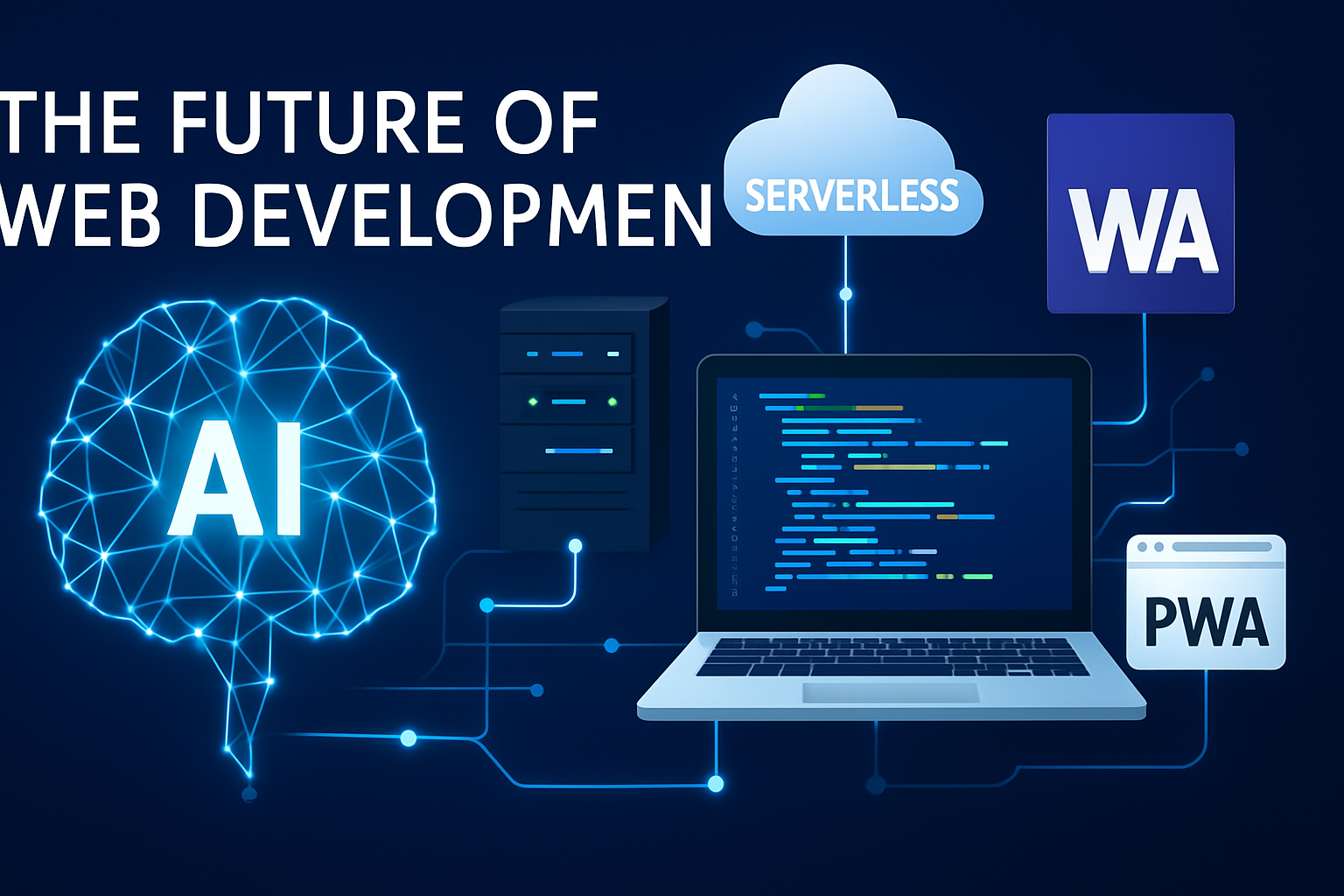
Latest Web Development Trends for 2025: What Every Developer Needs to Know
With the rapid evolution of technology, the world of web development is undergoing continuous transformations that require developers to stay up-to-date with the latest trends and technologies. The year 2025 brings with it many innovations that will shape the future of the web, from Progressive Web Apps (PWAs) to Serverless Computing and Artificial Intelligence in web development. In this article, we will review the most prominent of these trends that every web developer should know to stay at the forefront of this changing field.
1. Progressive Web Apps (PWAs): User Experience First
Progressive Web Apps (PWAs) are not a new concept, but they are gaining increasing momentum as a solution that combines the best features of web applications and native apps. PWAs provide a significantly enhanced user experience by offering functionalities such as offline operation, push notifications, and access to device features, all through a web browser. By 2025, PWAs are expected to become the standard for web development, as companies strive to deliver fast, reliable, and engaging experiences to their users across all devices.
Key Features of PWAs:
•Reliability: Work even in poor network conditions or offline thanks to Service Workers.
•Speed: Load quickly and provide instant response to user interactions.
•Engagement: Offer an immersive user experience similar to native apps, with push notifications and home screen access.
Why are they important for developers?
Understanding how to build and optimize PWAs will become an essential skill. This includes mastering Service Workers, Web Storage, and Caching Strategies to ensure smooth performance and an excellent user experience.
2. Serverless Computing: Simplifying Infrastructure
Serverless computing, or FaaS (Functions as a Service), radically changes the way applications are built and deployed. Instead of managing servers and infrastructure, developers can focus solely on writing code for specific functions, and these functions are executed on demand by the cloud service provider (such as AWS Lambda, Google Cloud Functions, Azure Functions). This trend significantly reduces operational costs and increases development speed.
Advantages of Serverless Computing:
•Cost Savings: Pay only for the resources actually used when functions are executed.
•Automatic Scalability: Functions automatically scale to meet demand without manual intervention.
•Reduced Operational Complexity: No need to manage servers or debug infrastructure-related errors.
Why is it important for developers?
Developers will need to understand how to design event-driven architectures and how to integrate serverless functions with other cloud services. This requires a shift in thinking from monolithic applications to microservices and functions.
3. Artificial Intelligence (AI) and Machine Learning (ML) in Web Development: The Smart Web
Artificial Intelligence and Machine Learning are no longer limited to specialized fields; they have become an integral part of modern web development. From intelligent chatbots and personalized recommendation engines to big data analysis and user experience optimization, AI opens new horizons for developers to create smarter and more interactive web applications. By 2025, the ability to integrate AI and ML models into web applications will be an indispensable skill.
AI Applications in Web:
•Content Personalization: Delivering personalized content and recommendations to users based on their behavior and preferences.
•Search Engine Optimization (SEO): Using AI to analyze search data and improve website rankings.
•Automation: Automating repetitive tasks such as responding to customer inquiries and data analysis.
•Predictive Analytics: Predicting user behavior and market trends to improve business strategies.
Why is it important for developers?
Developers will need to understand the basics of machine learning, how to use AI APIs, and how to integrate machine learning models into web applications. Understanding AI ethics and data bias will also become crucial.
4. WebAssembly (Wasm): Near-Native Performance on the Web
WebAssembly (Wasm) is a technology that allows code written in languages like C++, Rust, and Go to run on the web at near-native speeds. This opens the door for high-performance web applications that require intensive processing, such as 3D games, video editing, and CAD applications, which were previously exclusive to native applications. With the increasing complexity of web applications, Wasm will become a vital tool for developers seeking to achieve maximum performance.
Advantages of WebAssembly:
•High Performance: Running code at speeds close to native execution.
•Multi-Language Support: The ability to use different programming languages for web development.
•Security: Operates in an isolated and secure environment within the browser.
Why is it important for developers?
Developers will need to understand how to compile code to Wasm and how to integrate Wasm modules into JavaScript-based web applications. This allows them to leverage existing libraries and frameworks in other languages to improve the performance of web applications.
5. Frontend Development with Modern JavaScript Frameworks
JavaScript frameworks like React, Angular, and Vue.js continue to evolve and introduce new features that facilitate the development of complex front-end interfaces. By 2025, these frameworks will see further improvements in performance, developer experience, and scalability. New frameworks will also emerge that focus on more specialized solutions, such as next-generation frameworks that better support Server-Side Rendering (SSR) and Static Site Generation (SSG).
Importance of JavaScript Frameworks:
•Efficiency: Accelerating the development process through reusable components.
•Performance: Improving the performance of web applications through techniques like Virtual DOM.
•Maintainability: Facilitating the management of large and complex codebases.
Why is it important for developers?
Staying up-to-date with the latest features and enhancements in these JavaScript frameworks is crucial. Understanding when and how to use SSR and SSG will also help developers build web applications optimized for search engines and provide a fast user experience.
6. Cybersecurity in Web Development: A Top Priority
With increasing cyber threats, cybersecurity has become a top priority at every stage of web development. By 2025, merely implementing basic security practices will not be enough; developers will need to adopt a “Security by Design” approach to ensure applications are secure from the outset. This includes data protection, preventing common attacks (such as XSS and SQL Injection), and securing Application Programming Interfaces (APIs).
Essential Cybersecurity Practices:
•Input Validation: Validating all inputs to prevent malicious code injection.
•Encryption: Using encryption to protect sensitive data during transit and storage.
•Identity and Access Management: Implementing robust authentication and authorization mechanisms.
•Updating Libraries and Frameworks: Keeping all libraries and frameworks updated to patch known security vulnerabilities.
Why is it important for developers?
Developers will need to understand cybersecurity principles, how to conduct penetration testing, and how to respond to security incidents. The use of static code analysis and dynamic code analysis tools will also become a routine part of the development process.
7. Sustainable Web Development: The Green Web
With increasing awareness of climate change, sustainable web development is gaining importance. This trend focuses on building web applications that consume less energy and leave a smaller carbon footprint. By 2025, developers will begin integrating green web practices into their work, from optimizing website performance to reduce energy consumption to choosing eco-friendly hosting.
Sustainable Web Development Practices:
•Performance Optimization: Reducing file sizes, optimizing images, and using Content Delivery Networks (CDNs) to reduce energy consumption.
•Hosting Selection: Choosing hosting providers that use renewable energy.
•User Interface Design: Designing simple and efficient user interfaces that reduce the need for processing resources.
Why is it important for developers?
Developers will need to understand how to measure the carbon footprint of their web applications and how to implement sustainable development practices. This not only contributes to environmental protection but can also lead to improved website performance and cost savings.
Conclusion
2025 will witness significant transformations in the world of web development, driven by innovations in artificial intelligence, cloud computing, and performance. To stay ahead, web developers must embrace these new trends and expand their skill sets to include PWAs, serverless computing, AI integration, WebAssembly, cybersecurity practices, and sustainable web development. By investing in these areas, developers can build more powerful, efficient, and secure web applications that meet future demands and attract visitors to websites like wael-tech.com.


لا تعليق