

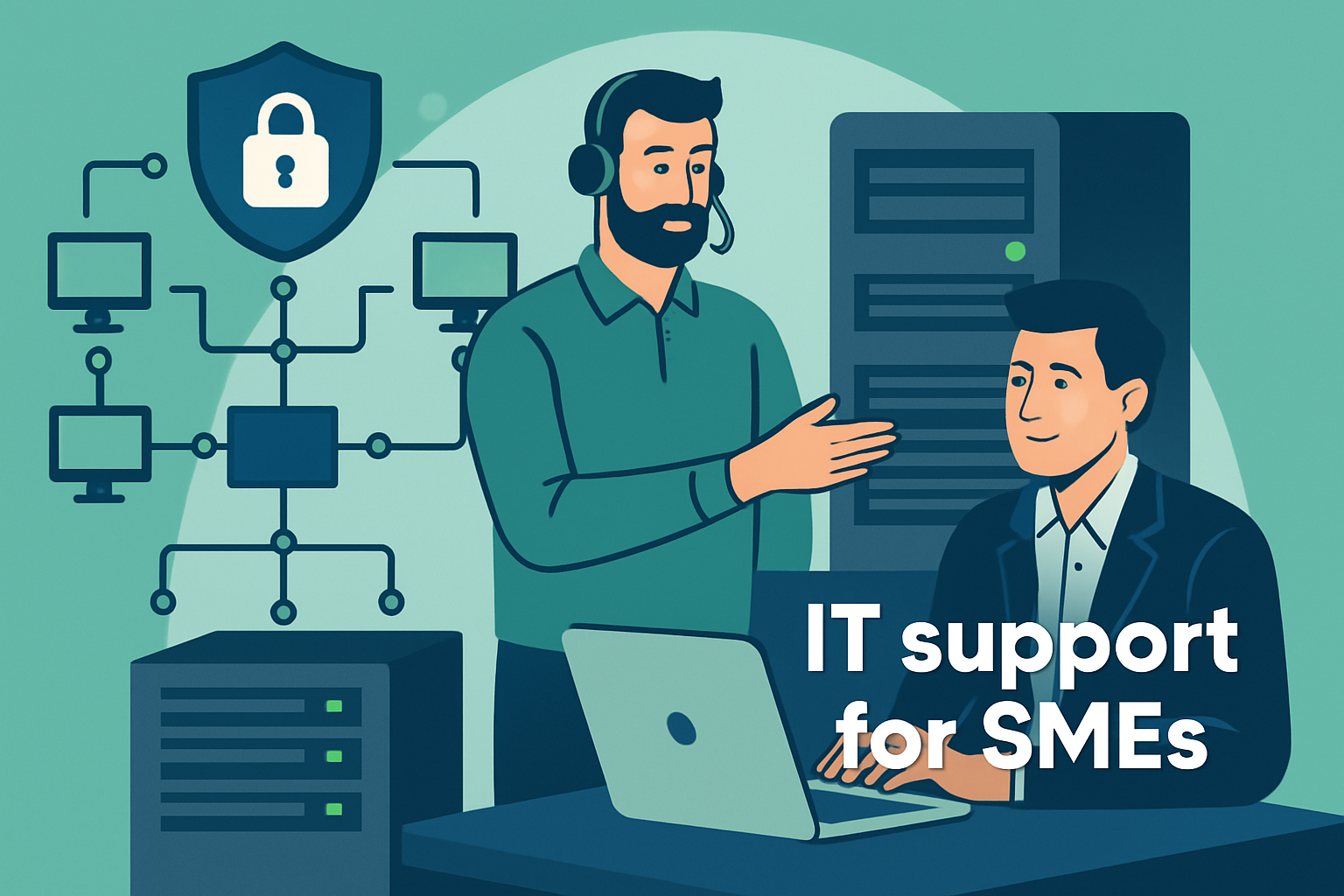
The Importance of Technical Support for Small and Medium-sized Enterprises (SMEs)
Introduction
In today’s business world, where technological advancements are accelerating and reliance on digital systems is increasing, Small and Medium-sized Enterprises (SMEs) face unique challenges. Technical support is no longer just an additional service; it has become an essential necessity to ensure business continuity and success. This article aims to highlight the utmost importance of technical support for SMEs and how it can contribute to enhancing their efficiency, protecting their data, and achieving sustainable growth.
Why Do SMEs Need Technical Support?
SMEs are increasingly relying on technology in all aspects of their operations, from customer relationship management to accounting and digital marketing. With this growing reliance, the likelihood of encountering technical issues that can negatively impact productivity and overall performance increases. These issues can range from simple hardware and software malfunctions to serious security threats and data loss. This is where the importance of technical support emerges as a first line of defense to ensure smooth operations and protect digital assets.
1. Reducing Downtime
Downtime is one of the biggest challenges facing SMEs. Every minute a system is down or a network is disrupted means a loss of revenue, delays in service delivery, and a decline in customer satisfaction. Technical support provides a quick and effective response to technical issues, reducing downtime and ensuring business continuity. [1]
2. Enhancing Cybersecurity and Data Protection
SMEs are attractive targets for cybercriminals due to often having weaker security defenses compared to large corporations. A cyberattack can lead to the loss of sensitive data, identity theft, reputational damage, and hefty financial penalties. Technical support plays a vital role in implementing and updating security measures, monitoring networks for threats, and providing data backup and recovery solutions. [2]
3. Increasing Efficiency and Productivity
When employees encounter technical issues, they waste valuable time trying to resolve them themselves, negatively impacting their productivity. Technical support provides quick solutions to problems, allowing employees to focus on their core tasks and increase their efficiency. Technical support can also advise on best technological practices and tools that can enhance productivity. [3]
4. Long-Term Cost Savings
While technical support services may seem like an additional cost, they are actually an investment that saves costs in the long run. Through preventive maintenance, regular system updates, and addressing issues before they escalate, technical support can prevent major breakdowns that might require costly repairs. It also reduces the need to hire a full-time in-house technical team, saving on salary and benefits costs. [4]
5. Access to Specialized Expertise
Most SMEs do not have the resources to hire experts in all areas of information technology. Outsourced IT Support provides access to a team of experienced specialists in various fields such as network security, server management, and software development, ensuring that the company receives the best available technical solutions. [5]
Types of Technical Support for SMEs
Technical support can take various forms to meet the needs of SMEs:
1. In-house IT Support
This involves hiring an internal technical team responsible for managing all aspects of the IT infrastructure. This option is suitable for larger companies with complex technical needs and significant budgets.
2. Outsourced IT Support
This involves contracting with an external service provider to deliver technical support services. This option is common among SMEs as it provides access to specialized expertise at a lower cost. Outsourced support can include Managed Services, where the provider takes full responsibility for managing the company’s IT.
3. Hybrid Support
This model combines in-house and outsourced support, where the internal team handles daily issues, while the external provider takes on more complex or specialized tasks.
Choosing the Right Technical Support Provider
When choosing a technical support provider, SMEs should consider the following factors:
•Experience and Specialization: Does the provider have experience in your industry? Do they have specialists in the technologies you use?
•Responsiveness and Support: What is the expected response time? Do they offer 24/7 support?
•Security and Compliance: Do they follow cybersecurity best practices? Do they comply with industry regulations and standards?
•Cost and Transparency: Is the pricing structure clear and transparent? Are there any hidden fees?
•Reviews and Reputation: What are the opinions of current and former clients?
Conclusion
In conclusion, the importance of technical support for SMEs cannot be overstated. It is not merely a service for fixing malfunctions; it is a strategic partner that contributes to protecting businesses, enhancing their efficiency, and enabling them to grow in a competitive environment. By investing in appropriate technical support, SMEs can ensure the continuity of their operations, protect their valuable data, and focus on achieving their business goals successfully.



No comment