
 then 'Add to home screen'
 then 'Add to home screen'

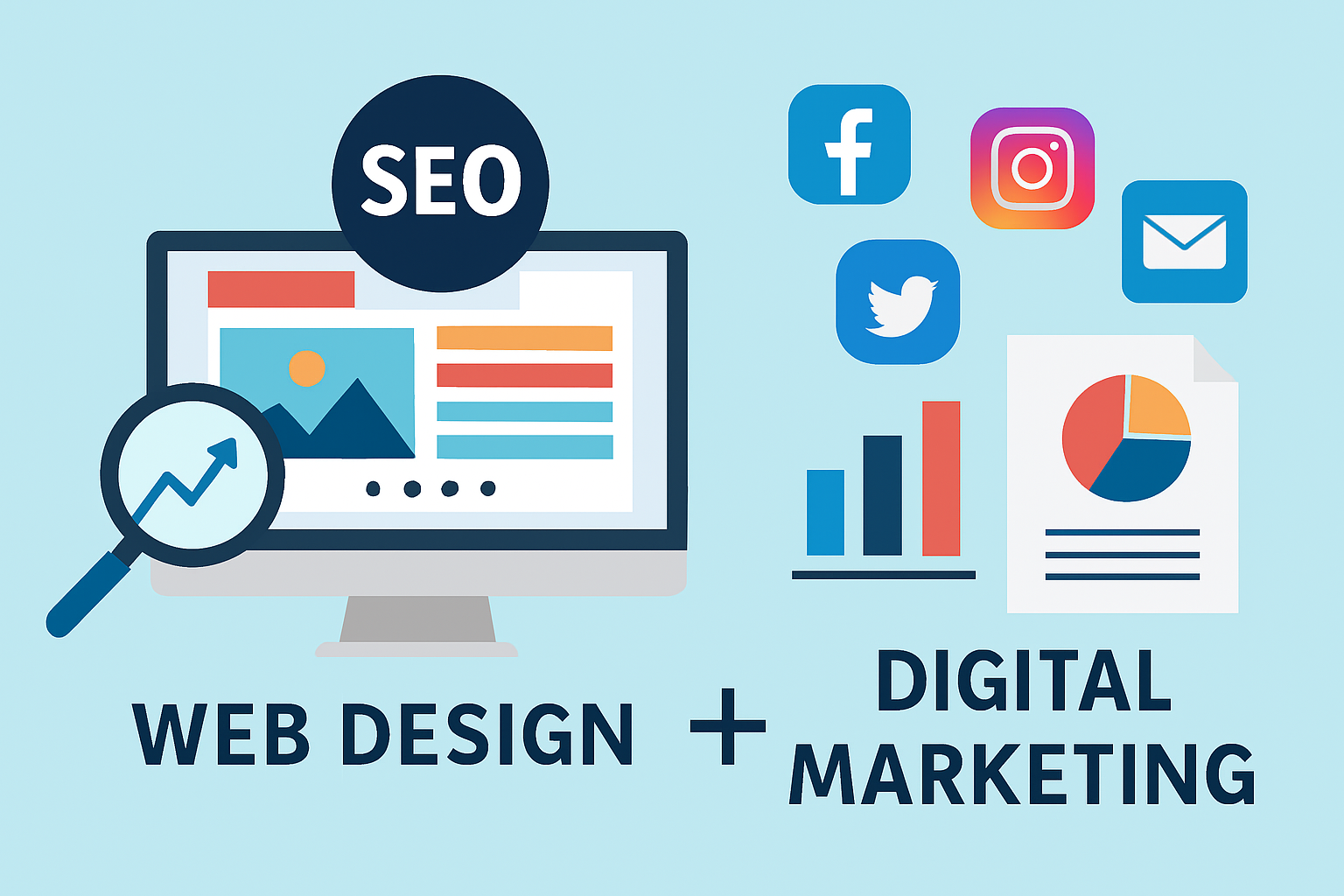
Secrets of Attractive Website Design That Convert Visitors into Customers
In today’s digital world, your website has become your first interface with potential customers. Merely having an online presence is no longer enough; your website must be attractive, effective, and capable of converting visitors into real customers. Website design is not just about aesthetics; it’s a strategic process aimed at achieving your business goals. In this article, we will reveal the secrets of attractive website design that not only capture attention but also drive visitors to take action and turn them into loyal customers.
1. User Experience (UX) First and Foremost
User experience is the cornerstone of any successful website design. If your website is difficult to use, visitors will quickly leave, regardless of how beautiful it is. The website should be intuitive, easy to navigate, and provide a seamless experience for the user. Here are some essential elements for an excellent user experience:
•Intuitive Navigation: Menus should be clear and organized, allowing visitors to easily find what they are looking for. Use clear and familiar labels for sections.
•Page Load Speed: No one likes to wait. Slow websites lead to high bounce rates and harm your search engine ranking. Optimize images, use caching, and minimize unnecessary scripts.
•Responsive Design: With the increasing use of smartphones and tablets, your website must be fully adaptable to all screen sizes. This ensures a consistent and enjoyable experience for users regardless of the device they are using.
•Clear Content: Use clear and concise language. Avoid complex terminology. Divide content into short paragraphs and use subheadings and bullet points for easy readability.
2. Visual Appeal and Professional Design
Your website’s visual appearance is the first thing that catches visitors’ attention. The design should be professional, consistent, and reflect your brand identity. Visual appeal is not just about colors and images, but also includes the overall layout, fonts, and white space.
•Consistent Color Palette: Choose colors that reflect your brand and evoke desired emotions. Maintain consistency in color usage across all website pages.
•Legible Typography: Choose fonts that are easy to read and suitable for your target audience. Use appropriate font sizes for headings and body text.
•High-Quality Visuals: Use professional and relevant images and videos. Attractive visuals increase engagement and help convey your message effectively.
•White Space: Don’t be afraid to use white space around elements. It helps improve readability, guides the user’s eye, and makes the design look cleaner and more professional.
3. Search Engine Optimization (SEO) as an Integral Part of Design
A beautiful website that is not visible in search engines serves no purpose. Your website design must be search engine friendly to ensure visitors can find it. Integrating SEO into the design process from the beginning is crucial.
•Keywords: Naturally integrate relevant keywords into page titles, descriptions, content, and URLs.
•Site Structure: Your website’s structure should be logical and organized, making it easy for search engines to crawl and index your pages. Use strong internal links.
•Meta Data: Write descriptive meta titles and attractive meta descriptions for each page. These appear in search results and affect the click-through rate (CTR).
•Image Optimization: Use descriptive file names for images and alt text containing keywords. Compress images to reduce load times.
4. Clear Call to Action (CTA)
The ultimate goal of your website design is to convert visitors into customers. Calls to action should be clear, compelling, and easily visible. Consider what you want the visitor to do after reading the content.
•Clarity: Use clear and direct texts such as “Buy Now,” “Sign Up for Free,” “Contact Us,” “Get a Quote.”
•Placement: Place CTA buttons in prominent locations on the page, where visitors can easily see them without having to search.
•Design: Make CTA buttons visually distinctive using contrasting colors and appropriate sizes to attract attention.
•Value Proposition: Clearly explain the value the visitor will receive when clicking the CTA. For example, instead of “Sign Up,” it could be “Sign Up to Get 20% Discount.”
5. Data Analysis and Continuous Improvement
Website design is not a one-time process. There should be continuous improvement based on data analysis and user behavior. Use analytics tools like Google Analytics to understand how visitors interact with your website.
•User Behavior Tracking: Monitor the most visited pages, bounce rates, and the time visitors spend on each page. This helps you identify strengths and weaknesses in your design.
•A/B Testing: Conduct A/B tests on different elements of your website (such as CTA buttons, headlines, layout) to determine what is most effective in achieving your goals.
•Gather Feedback: Listen to user feedback through surveys, contact forms, or even direct conversations. This feedback can provide valuable insights for improvement.
Conclusion
Designing an attractive and effective website requires a blend of aesthetics, functionality, and strategy. By focusing on user experience, visual appeal, search engine optimization, clear calls to action, and continuous improvement, you can build a website that not only attracts visitors but also converts them into loyal customers. Remember that your website is a powerful marketing tool, and your investment in its design is an investment in the long-term success of your business.



لا تعليق